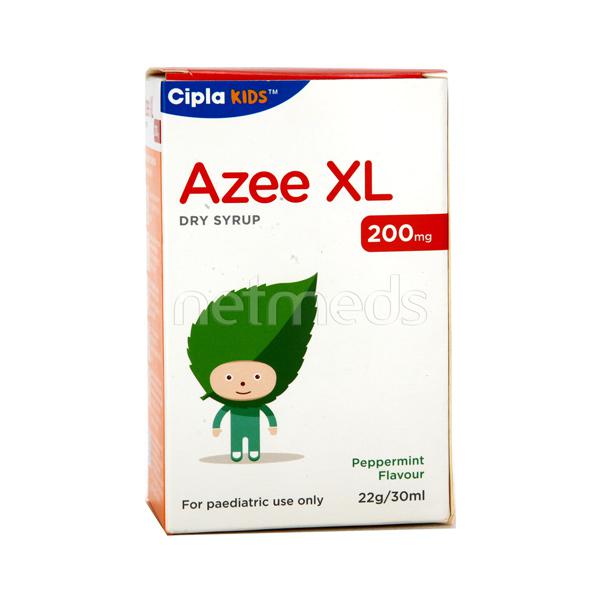
Azee XL 200 mg Peppermint Dry Syrup is used to treat several bacterial infections of the upper/lower respiratory tract, middle ear, skin and soft tissue. A bacterial infection is a condition in which harmful bacteria grow in the body and cause infection. It can infect any part of the body and multiply very quickly. Azee XL 200 mg Peppermint Dry Syrup does not work against infections caused by a virus.
Azee XL 200 mg Peppermint Dry Syrup contains Azithromycin, which works by inhibiting the production of essential proteins that are necessary for bacteria to grow, multiply and increase in numbers. Thus, it prevents the growth of bacteria.
Give Azee XL 200 mg Peppermint Dry Syrup to your child as prescribed by the doctor. Azee XL 200 mg Peppermint Dry Syrup may cause common side effects such as diarrhoea, vomiting, headache, nausea or stomach pain. Most of these side effects of Azee XL 200 mg Peppermint Dry Syrup do not require medical attention and gradually resolve over time. However, if the side effects persist or worsen, please consult your doctor.
If your child is allergic to Azithromycin or other medicines, please tell the doctor. Azee XL 200 mg Peppermint Dry Syrup should be used only in doses prescribed by a doctor for children. It is recommended that you complete the full course of Azee XL 200 mg Peppermint Dry Syrup as prescribed by the doctor, even if your child feels better after a few days.
Uses of Azee XL 200 mg Peppermint Dry Syrup
Treatment of bacterial infections.
Directions for Use
Twist and open the vial of sterile water given with the pack. Add half the quantity of sterile water into the bottle. Put the cap and shake the bottle vigorously. Adjust the volume to the label's mark by adding more sterile water and shaking again. Store the reconstituted suspension in a cool place. It should be consumed within five days. Any extra portion left should be thrown away.
Medicinal Benefits
Azee XL 200 mg Peppermint Dry Syrup belongs to a class of medications called antibiotics. It contains Azithromycin, which is used to treat several bacterial infections in children. Azithromycin inhibits the production of essential proteins that are necessary for bacteria to grow, multiply, and increase in number.
How Azee XL 200 mg Peppermint Dry Syrup Works
Azee XL 200 mg Peppermint Dry Syrup contains Azithromycin, which works by inhibiting the production of essential proteins that are necessary for bacteria to grow, multiply and increase in numbers. Thus, it prevents the growth of bacteria.
Storage
Store in a cool and dry place away from sunlight
Side effects of Azee XL 200 mg Peppermint Dry Syrup 30 ml
Here are the precise steps to cope with diarrhoea caused by medication usage:
Inform Your Doctor: Notify your doctor immediately about your diarrhoea symptoms. This allows them to adjust your medication or provide guidance on managing side effects.
Stay Hydrated: Drink plenty of fluids to replace lost water and electrolytes. Choose water, clear broth, and electrolyte-rich drinks. Avoid carbonated or caffeinated beverages to effectively rehydrate your body.
Follow a Bland Diet: Eat easy-to-digest foods to help firm up your stool and settle your stomach. Try incorporating bananas, rice, applesauce, toast, plain crackers, and boiled vegetables into your diet.
Avoid Trigger Foods: Steer clear of foods that can worsen diarrhoea, such as spicy, fatty, or greasy foods, high-fibre foods, and dairy products (especially if you're lactose intolerant).
Practice Good Hygiene: Maintain good hygiene to prevent the spread of infection. To stay healthy, wash your hands frequently, clean and disinfect surfaces regularly, and avoid exchanging personal belongings with others.
Take Anti-Diarrheal Medications: If your doctor advises, anti-diarrheal medications such as loperamide might help manage diarrhoea symptoms. Always follow your doctor's directions.
Keep track of your diarrhoea symptoms. If they don't get better or worse or are accompanied by severe stomach pain, blood, or dehydration signs (like extreme thirst or dark urine), seek medical help.
To prevent, manage, and treat Constipation caused by medication usage, follow these steps:
Preventing Vomiting (Before it Happens)
Take medication exactly as prescribed by your doctor. This can help minimize side effects, including vomiting.
Having a small meal before taking your medication can help reduce nausea and vomiting.
Talk to your doctor about taking anti-nausea medication along with your prescribed medication.
Managing Vomiting (If it Happens)
Try taking ginger in the form of tea, ale, or candy to help alleviate nausea and vomiting.
What to Do if Vomiting Persists
Consult your doctor if vomiting continues or worsens, consult the doctor for guidance on adjusting your medication or additional treatment.
Drink water or other clear fluids.
To prevent worsening of pain, limit intake of tea, coffee, or alcohol.
Include bland foods like rice, toast, crackers, and rice in your diet.
Avoid lying down immediately after eating as it may cause indigestion or heartburn.
Avoid acidic and spicy food as it may cause indigestion.
Here are the steps to manage Gastrointestinal Air and Swelling (GAS) caused by medication:
Tell your doctor about your GAS symptoms. They may change your medication regimen or prescribe additional drugs to help you manage them.
To manage GAS symptoms, eat a balanced diet of fibre, vegetables, and fruits.
Drink enough water throughout the day to avoid constipation and treat GAS symptoms.
Regular exercise like yoga and walking may help stimulate digestion and alleviate GAS symptoms.
Take probiotics only if your doctor advises, as they may help alleviate GAS symptoms by promoting gut health.
Take medication for GAS symptoms only if your doctor advises, as certain medications can interact with your existing prescriptions or worsen symptoms.
If symptoms persist, worsen, or are accompanied by severe abdominal pain, vomiting, or bleeding, seek immediate medical attention.
Avoid taking raw fruits, nuts and vegetables.
Do not share your personal things with others like toothbrushes.
Clean the wounds and cuts using soap and water.
Wash your hands thoroughly and frequently and maintain hygiene.
Get a good quality of sleep.
Here are the precise steps to cope with diarrhoea caused by medication usage:
Inform Your Doctor: Notify your doctor immediately about your diarrhoea symptoms. This allows them to adjust your medication or provide guidance on managing side effects.
Stay Hydrated: Drink plenty of fluids to replace lost water and electrolytes. Choose water, clear broth, and electrolyte-rich drinks. Avoid carbonated or caffeinated beverages to effectively rehydrate your body.
Follow a Bland Diet: Eat easy-to-digest foods to help firm up your stool and settle your stomach. Try incorporating bananas, rice, applesauce, toast, plain crackers, and boiled vegetables into your diet.
Avoid Trigger Foods: Steer clear of foods that can worsen diarrhoea, such as spicy, fatty, or greasy foods, high-fibre foods, and dairy products (especially if you're lactose intolerant).
Practice Good Hygiene: Maintain good hygiene to prevent the spread of infection. To stay healthy, wash your hands frequently, clean and disinfect surfaces regularly, and avoid exchanging personal belongings with others.
Take Anti-Diarrheal Medications: If your doctor advises, anti-diarrheal medications such as loperamide might help manage diarrhoea symptoms. Always follow your doctor's directions.
Keep track of your diarrhoea symptoms. If they don't get better or worse or are accompanied by severe stomach pain, blood, or dehydration signs (like extreme thirst or dark urine), seek medical help.
Overcome Medication-Induced Nausea: A 9-Step Plan
Inform your doctor about the nausea and discuss possible alternatives to the medication or adjustments to the dosage.
Divide your daily food intake into smaller, more frequent meals to reduce nausea.
Opt for bland, easily digestible foods like crackers, toast, plain rice, bananas, and applesauce.
Avoid certain foods that can trigger nausea, such as fatty, greasy, spicy, and smelly foods.
Drink plenty of fluids, such as water, clear broth, or electrolyte-rich beverages like coconut water or sports drinks.
Use ginger (tea, ale, or candies) to help relieve nausea.
Get adequate rest and also avoid strenuous activities that can worsen nausea.
Talk to your doctor about taking anti-nausea medication if your nausea is severe.
Record when your nausea occurs, what triggers it, and what provides relief to help you identify patterns and manage your symptoms more effectively.
Drug Warnings
If your child is allergic to Azithromycin or other medicines, please tell the doctor. Azee XL 200 mg Peppermint Dry Syrup should be used only in doses prescribed by a doctor for children. You are recommended to complete the full course of Azee XL 200 mg Peppermint Dry Syrup as prescribed by the doctor, even if your child feels better after a few days.